A product launch and a leadership retreat may take place in the same venue, but they rarely need the same room.
At a product showcase, attendees are moving to stop at demonstrations, test technology, charge devices, and navigate between activations. At a leadership retreat, people may spend an hour in the same conversation, where comfort matters more than circulation and privacy matters more than visibility.
Most events fall somewhere between those two extremes. That's why event design works best when planners start with function. Before selecting furniture, it helps to understand how attendees will spend their time. Are they moving from station to station? Sitting through presentations? Networking between sessions? Participating in small-group discussions? The answers shape the room.
An event built around product discovery requires different furniture than an event built around relationship-building. Whereas a user conference with keynotes, breakouts, and networking receptions may need both.
The most effective event environments aren't built around a furniture collection or design trend. They're built around how people will use the space once the doors open.
Key Takeaways
-
Understanding whether attendees need to learn, network, collaborate, or explore helps shape better layout and furniture decisions.
-
Product showcases and activations benefit from layouts that support movement, while leadership retreats and relationship-focused events prioritize comfort and conversation.
-
Most events need a balance of both. Conferences, user events, and sales meetings often require spaces that can support presentations, collaboration, networking, and informal interactions throughout the day.
-
Furniture influences how an event functions. Furniture plays a direct role in attendee experience and can help planners create more flexible, adaptable environments.
When the Goal is Movement
Technology-focused events tend to create activity naturally, but the challenge is actually managing it. A popular product demo can attract a crowd in minutes. A charging station can become one of the busiest spots on the show floor. An activation that looks perfect on a floorplan can create a bottleneck once attendees start gathering around it. Furniture helps control how that activity moves through the room.
High-top, bar tables keep traffic moving differently than traditional seating. Demo counters create natural interaction points without requiring attendees to stop in the middle of a walkway. Perching stools provide a place to pause without turning a quick conversation into a thirty-minute stop.
Power access also plays a larger role than many planners expect. Attendees carrying laptops, tablets, and phones will naturally gravitate toward places where they can recharge. Spreading powered furniture throughout an event space often distributes activity more evenly than relying on a handful of charging stations.
In these environments, furniture is less about creating places to sit and more about supporting movement.
When the Goal is Belonging
Walk into a networking reception and you'll usually see the same thing. Some attendees immediately join conversations, while others stop near the perimeter of the room. They grab a drink, check their phone, or take a few minutes to get comfortable before engaging. The environment can make that process easier.
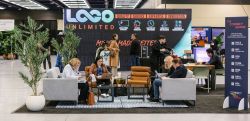
A room filled entirely with high-top bar tables creates a different experience than one with a mix of lounge seating, communal tables, and casual gathering areas. Giving attendees options in where they can come together allows them to engage in a way that feels natural.
Small seating groupings become some of the busiest areas at an event, not because they were scheduled meeting spaces, but because they gave people a comfortable place to continue conversations that started elsewhere.
Sometimes the most effective networking space isn't the one with the most programming, but rather the one that gives attendees a reason to stay and talk
When the Goal is Connection
Leadership retreats, customer advisory boards, executive meetings, and internal culture events place different demands on a room. In these settings, attendees are not moving from activation to activation. They're spending time together.
Rows of chairs facing a stage can work well for presentations, but they tend to be less effective when the goal is discussion. The same is true for large banquet layouts, which often separate attendees into smaller groups rather than encouraging broader interaction. Connection-focused events often benefit from softer environments.
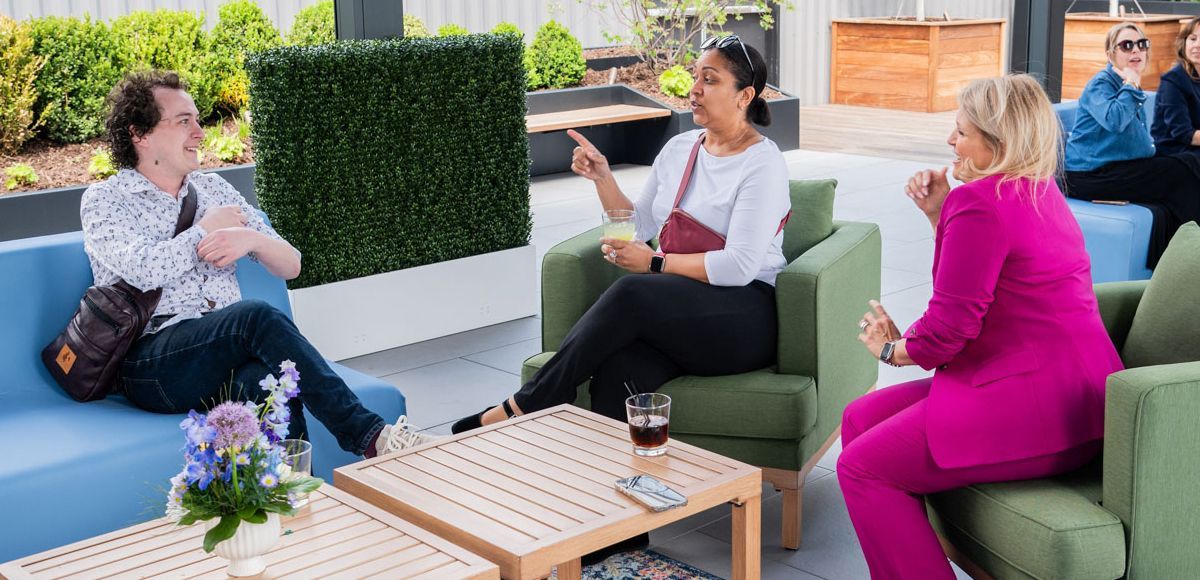
Lounge seating creates space for conversation. Smaller furniture groupings encourage discussion among people who may not know each other well. Semi-private areas that utilize intentional dividers like greenery, allow conversations to continue after scheduled sessions end. These spaces don't need to feel overly casual. They simply need to feel inviting enough for people to stay engaged.
The room won't create relationships on its own, but it can remove some of the barriers that make meaningful conversations harder.
Why Most Events Need Both
Furniture is often viewed as part of the design package, but in practice, it affects much more than appearance. It influences traffic flow, determines where people gather, and affects whether attendees stay for a conversation or keep moving. It can make a room feel crowded, comfortable, formal, or approachable and those decisions also affect the planning process.
Flexible furniture solutions simplify room transitions. They make it easier to accommodate changes in attendance. They reduce the number of last-minute adjustments that often happen onsite when a layout isn't working as expected.
That's why furniture should be considered early in the planning process. By the time attendees enter the room, many of their interactions have already been shaped by the environment around them.
The Role Furniture Plays in Attendee Experience
Furniture is often viewed as part of the design package, but in practice, it affects much more than appearance. It influences traffic flow, determines where people gather, and affects whether attendees stay for a conversation or keep moving. It can make a room feel crowded, comfortable, formal, or approachable and those decisions also affect the planning process.
Flexible furniture solutions simplify room transitions. They make it easier to accommodate changes in attendance. They reduce the number of last-minute adjustments that often happen onsite when a layout isn't working as expected.
That's why furniture should be considered early in the planning process. By the time attendees enter the room, many of their interactions have already been shaped by the environment around them.
Design the Space to Match the Experience
The most effective events are not defined by how much technology they use or how soft the seating feels. They are defined by how well the environment supports the reason people came in the first place. When you start with the event type and use furniture as a strategic tool, you create a space that does more than look finished. You create a space that performs.
Being in tune with your guests’ goals and needs is paramount, and CORT can help you read the room. Partner with CORT Events to create a space that encompasses all of your needs, whether it be high-tech, high-touch, or a combination of the two.