A line stretching across the show floor will almost always get attention. Attendees notice the crowd, stop to see what’s happening, and often join in themselves. From the outside, all that activity can look like a clear sign that an activation is working.
But traffic only tells you that people stopped. It doesn’t tell you whether they remembered the brand, learned about a product, talked with someone, or took the next step the activation was created to encourage.
Traffic, participation, engagement, and outcomes measure different parts of the experience. Before evaluating an activation, start with the result it was designed to produce.
Key Takeaways
- A busy activation isn’t necessarily an effective one; success depends on whether it delivers the outcome it was designed to achieve.
- Start with the outcome by defining what attendees should do, learn, or remember before deciding what the activation should be.
- Look at why people are participating, not just how many, to understand whether the attraction is connecting attendees to the brand.
- Consider what happens around the activation, including how attendees wait, participate, exit, and continue the interaction.
- Plan the space around the desired behavior so the layout and furnishings support what attendees need to do there.
Start With What Should Happen Next
Creative concepts tend to get attention early in activation planning. The idea needs to be interesting enough to stop someone who has plenty of other places to go on a busy show floor.
Before developing that idea too far, define what should happen after someone stops.
An awareness campaign may need broad participation and repeated brand exposure. A lead-generation activation needs to give staff access to the right attendees and a way to capture information. Product education requires enough time and space to show or explain something clearly. For hospitality, the environment needs to give people a reason to stay.
Those objectives affect more than the metric reported after the event. They determine what needs to happen within the footprint.
Understand Why People Are Participating
Consider a professional headshot activation at a conference. It meets a real attendee need, has broad appeal, and can generate a steady line throughout the day.
If attendees primarily participate because they want a new LinkedIn photo, a long line doesn't necessarily indicate interest in the sponsoring company. For an awareness campaign, that volume and exposure may be useful. For a company trying to generate qualified leads, the headshot has primarily done one job: given the right attendees a reason to stop.
The rest of the activation needs to do the work of connecting that interest back to the company.
For a lead-generation objective, registration can capture relevant attendee information before the photo session, and staff can use the wait to introduce the company or learn why the attendee is at the event. If the conversation warrants more time, there needs to be a logical place for it to continue after the photo.
Now the success of the headshot activation isn't based solely on how many portraits were taken. The team can also look at who participated and what happened once they were there.
Use the Wait Instead of Automatically Eliminating It
Let Hospitality Start at the Door
Design the Footprint Around the Interaction
The CORT Events team can help clients translate these activation requirements into the physical space.
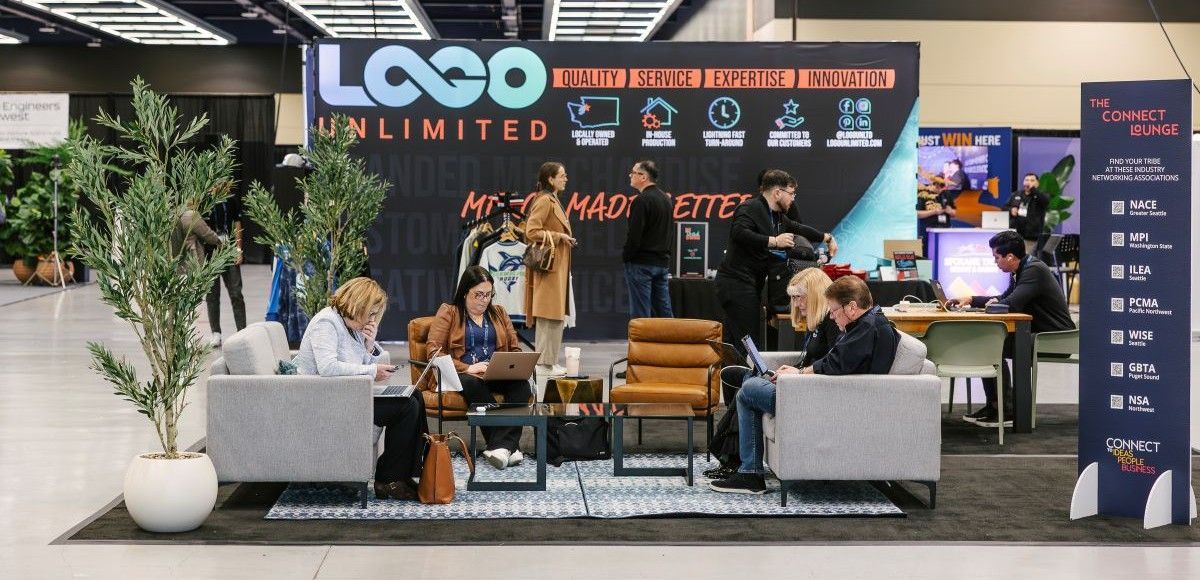
For the headshot example, that means looking beyond the furniture needed for the photo area. The footprint also has to account for where the queue forms, how staff reach attendees, whether the line interferes with show-floor traffic, and where a longer conversation can happen without blocking the next participant.
The same level of planning applies when an activation includes a demonstration, appointment area, hospitality space, or another next step. Furnishings and layout are selected based on the interactions the footprint needs to accommodate, rather than simply filling the available square footage.
That planning also helps avoid a common disconnect: creating an attraction that successfully gets someone to stop without giving the brand a practical way to engage them once they do.
Measure the Result You Planned For
The reporting should reflect the reason the activation was built.
For awareness, reach and recall may be useful measures. A lead-generation activation should look at the number and quality of contacts captured rather than relying on total participation. Product education can track completed demonstrations or what attendees learned, while sales-focused activations can measure substantive conversations, appointments, and follow-up opportunities.
A crowded activation may still be worth celebrating, but the line itself doesn't establish whether the investment worked.
For CORT Events, planning an activation means looking at what needs to happen inside and around that experience, then designing the physical environment to make those interactions possible.