Every event budget eventually reaches the point where something has to give.
At a recent showcase, food and beverage accounted for 61% of total event expenses, and the event ultimately came in roughly 10% over budget. On paper, a category consuming more than half the budget would seem like an obvious place to look for savings. But food and beverage was also a significant part of how guests were welcomed and cared for throughout the event. A substantial cut there would have been noticeable.
That example gets at one of the harder parts of managing an event budget: cost alone doesn’t tell you what deserves to stay.
When the numbers need to change, one question can help frame the conversation:
What part of this event would attendees genuinely experience differently if we reduced the spend?
Answering that requires looking beyond individual line items to understand which decisions are shaping the event attendees will actually experience.
Key Takeaways
- Pay attention to the parts of the budget attendees will feel most when deciding where there is room to reduce spend.
- Define the event’s non-negotiables before making cuts so the primary experience and operational requirements remain intact.
- Review major decisions early, because destination, venue, timing, and format can establish significant costs before design begins.
- Build flexibility into the design with rentals, modular furnishings, and elements that can work in more than one configuration or setting.
- Simplify details that don’t change the attendee experience before reducing seating, hospitality, or other elements the event depends on.
Establish the Non-Negotiables First
Before revising the budget, identify what the event has to deliver.
Start with the reason attendees are coming, then identify the moments that carry that experience and the operational requirements needed to make them work. Those are the places where a cut is most likely to be felt.
For the showcase, food and beverage represented 61% of expenses, so reducing it could certainly have helped close a budget gap. But cutting the menu, quantities, or service would also affect hospitality. That consequence needed to be weighed alongside the potential savings.
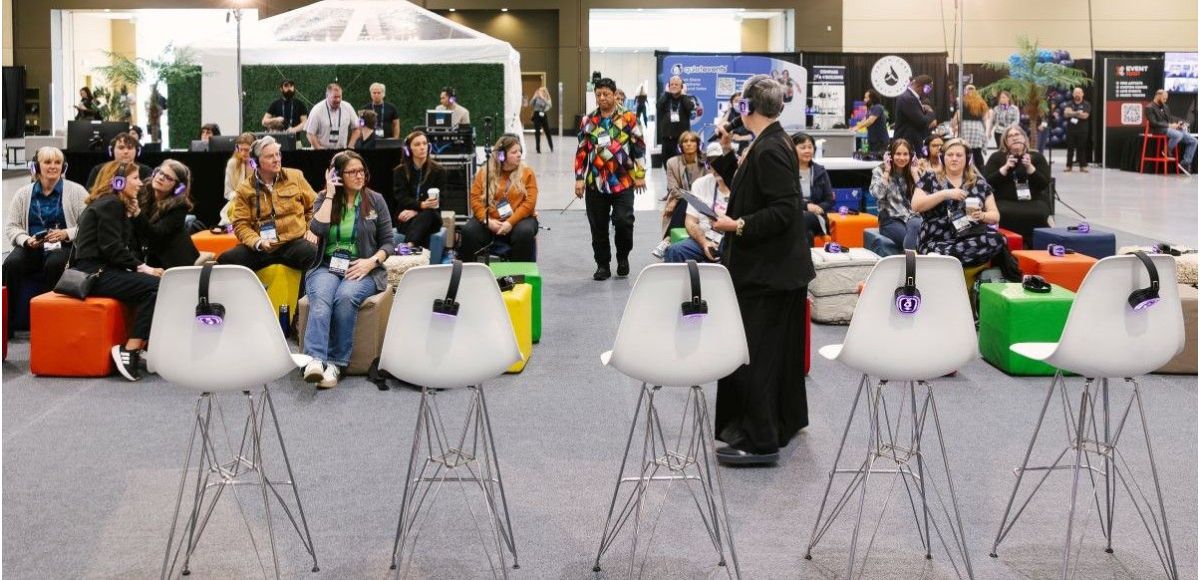
The same exercise applies to other categories. If guests need places to sit for a networking-heavy program, seating isn’t excess inventory. If a key part of the program depends on specific operational support, removing it creates a problem that will show up during the event.
Establishing those requirements first gives the rest of the budget more room to change.
Make the Expensive Decisions Earlier
Give the Design Room to Change
Put Visual Spend Where People Notice It
When the design needs to be scaled back, repetition is one place to look.
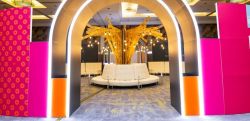
An entire furniture grouping doesn’t necessarily need a bold color to establish the palette. One statement chair can create a focal point, while neutral seating can take on more personality with pillows. Rugs, lighting, greenery, and selective personalization can add visual interest without requiring customization throughout the room.
CORT Events' accessories give planners another layer to work with when larger furnishings need to stay versatile. A rug can anchor a seating area, pillows can introduce color or pattern, and greenery can fill visual space without adding another large furnishing element.
With a limited budget, concentrating those details in the places where they’ll be noticed can have more impact than repeating the same treatment throughout the event.
Simplify Before You Compromise
Some changes affect the original design more than they affect the people attending the event.
Reducing repeated décor, limiting custom elements to one focal area, or selecting an existing product color are changes guests may never recognize as budget decisions.
Removing needed seating has a much clearer consequence. Guests notice when there isn’t somewhere to sit, when hospitality feels sparse, or when the layout makes it difficult to participate in the program.
CORT Events teams can help planners work through revisions at the product and floor-plan level. A higher-cost selection may have an alternative that still works with the design. A modular configuration may solve the same seating need with more flexibility. Accessories can carry color or personality when customization elsewhere has been reduced.
These are practical adjustments that preserve the parts of the event attendees will actually use and experience.
Protect the Outcome, Not Every Original Idea
The final event doesn’t need to match the first concept exactly. A custom finish may change, decorative elements may be scaled back, or furnishings may be reconfigured as the budget evolves.
What shouldn’t get lost are the things attendees depend on: enough seating, the hospitality the event promised, the functionality the program requires, and the experience they came for in the first place.
Those priorities give planners and their event partners a clearer place to start when the numbers need to change.
Connect with CORT Events to find flexible furnishing solutions that support your goals, adapt to changing budgets, and keep attendees at the center of every decision.